Showing posts with label France. Show all posts

April 24, 2011

the perfect egg: a recipe for îles flottantes and one for pain brioché


Iles Flottantes

with Lime & Jasmine Blossom Crème Anglaise & Rose Meringue
will serve 4 
for the Crème Anglaise:
3 egg yolks
1/2 cup of sugar
2 cups of milk
2 lime leaves
grated zest of 1 small lime
a handful of lime blossoms
a handful of jasmine blossoms
1 vanilla bean split in two

In a saucepan, bring the milk to a boil with the vanilla bean, grated lime zest, lime leaves, lime and jasmine blossoms.
In a bowl, beat the egg yolks with the sugar until pale yellow and doubled in volume.
Just before the milk reaches the boiling point, remove it from the heat, cool it for one minute and gently pour it on the egg yolks while whisking them.
Return the milk and eggs to the pan, cook over medium heat while stirring continously. 
Do not let the custard reach the boiling point. As soon as the custard coats the back of the spoon, remove from the heat and pour it in a cold bowl, whisk it until cooler. Place the custard in the fridge with a plastic film on top.

For the Meringue:
3 egg whites
2 Tsp of sugar
1 pinch of salt
1 tsp rose blossom water

In a perfectly clean bowl, beat the egg whites with the sugar, salt and rose water until they stiff and shiny.
Spoon on a lightly buttered baking sheet dollops of meringue. Cook at 100C
for 45 minutes, do not let them color too much, remove from the oven and let them cool.


Prepare the Iles Flottantes: pour the custard in a large bowl and float the meringues on top.

For the Caramel:
1/2 cup of sugar
2 Tsp water


In a heavy saucepan, heat the sugar with the water until it forms a syrup.
Let it bubble until it starts coloring, tilt the pan until the color is uniform but do not use a spoon otherwise the sugar will crystallize. Do this until a nice light mahogany color is reached.
Drizzle the caramel on top ot the meringues and serve.

Pain Brioché

makes one loaf or 10 small buns

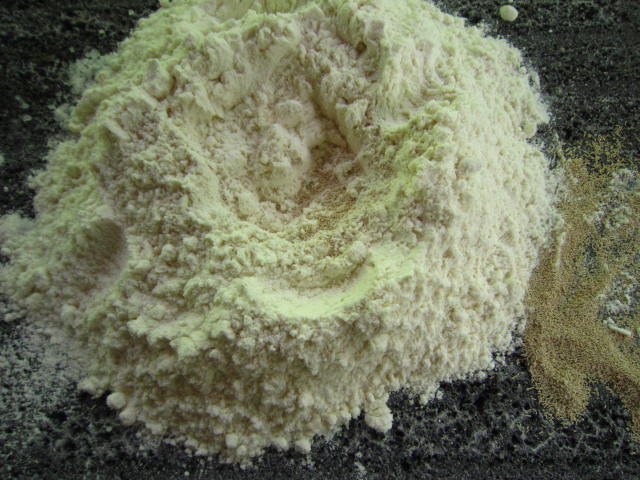
4 cups of flour
1Tbs of dry yeast
3 tbs of sugar
2 tsp of sea salt
3 large eggs
175grs (6oz) of unsalted butter
1 1/2 cup of milk


Place the flour, the sugar, the salt and the yeast in a large bowl. Mix together.
Melt the butter with the milk in a pan on low heat. When melted, remove from the heat and cool to barely warm. 
Add the eggs and the milk/butter to the flour, mix, then start to knead (it will be sticky), add a little flour if you need to. Continue to knead for 10 minutes. When the dough is satiny and feel springy, place in a buttered bowl and let rise for 2 hours in a warm place. After that time, it should be doubled its size. Punch it down and let rise another 2 hours (if you made the dough in the afternoon, let it rise in a cool place overnight).
Shape it in a loaf or in a braid or make buns.
Let the dough rise 20 minutes after you shape it.
Cook in a preheated oven 200C or 350F for 40 minutes for the loaves and 20 minutes for the buns until golden.


April 14, 2011

Baking bread in a different world


If there is one thing I miss a lot here in Bali, it is a good, crusty, warm loaf of bread fragrant with the sweet smell and heady tang of yeast. I have been dreaming for a long time to build a bread oven but so far, it has remained only that, a dream.


Not only could I bake bread in it but pizzas and fruit tarts as well. Ahhhhhh, just the thought of it transports me back to the bakeries in France at noon, when all the baguettes, pains de campagne and other breads are still warm and ready to be nibbled on the way back home.
A few months back, I decided that if the bread oven was a dream, the bread itself could possibly become a reality. I went to the town next to our village, bought an electric toaster oven/rotisserie and started to develop some recipes which, if not on a par with French bread, are pleasant and edible.
So for all of us who do not live in a country where good bread is available at every street corner, there is still hope for a decent loaf of daily bread!

    Baguettes et Petits Pains 


will make 5 baguettes or 10 petits pains

4 cups of bread flour
2 packages of dry yeast
2 tsp sea salt (you can increase to 1 Tbs if you like)
1 Tbs natural sugar
1 1/2 cup spring water (not tap because of the chlorine in it)
Place the flour in a bowl, add the yeast, the salt and the sugar. Mix with your hands, add the water.  (I do not bother with mixing the yeast, sugar and some water together first). Continue mixing with your hands until the water is incorporated, add some flour if you feel the dough is too wet.
Turn on a counter and start kneading, pulling and stretching, tucking it under to incorporate air in it. It will be tacky at this point but continue, it will start becoming more elastic as you knead. You may add a little flour if you start to have more dough on your hands than on the counter! 
Do this for 10 minutes until the dough is elastic and feels alive.
Form the dough in a ball and let it rise for 2 hours in a bowl covered with a towel in a warm, not drafty place.
After that time, when the dough has doubled in volume, deflate it gently. Add a bit of flour and form it in whatever shapes you want. Place the formed dough in a towel or on the baking tray and let it rise for 15minutes.
Bake at 475ºF or 250ºC for 20 minutes. Voilà, warm, crusty and chewy bread!


Olive Oil Dough & Fougasse


This soft dough is basically the same as above with the addition of extra virgin olive oil, the proportions are slightly different. It makes tender rolls and a perfect base for focaccia.

will make 2 large focaccias or 10 rolls

4 1/4 cups bread flour
2tsp sea salt
2tsp natural sugar
5/6 Tbs extra virgin olive oil
1 1/4 cup spring water
Follow the directions for the recipe above with the addition of the oil at the same time as the water.
This dough can rise longer and be punched down 2 times. I make a large batch in the afternoon, make rolls for dinner and keep half the dough for making focaccia for lunch next day.

Roasted Lemon, Onion & Garlic Focaccia


for the focaccia:
2Tbs extra virgin olive oil
Coarse sea salt for sprinkling
Sprigs of fresh rosemary
A few basil leaves
1 ripe tomato, sliced thinly


for roasting:
1/2 onion, thinly sliced
1/2 lemon, thinly sliced
1 garlic head, unpeeled
1tsp sugar
1Tbs olive oil
In a roasting pan, place the lemon, garlic and onion. Mix and rub the oil and sugar in. Roast 200ºC (375ºF) until  golden. Let cool slightly. Push the roasted garlic out of their skins. Cut the lemons in small pieces.
When the dough is rested, take half of it and turn it on a baking tray, push the dough to fit, from the center to the sides, but do not stretch it, poke it with your fingers and drizzle the oil. Cover with a dishtowel, let rest for 45 minutes.


When rested, poke the dough again gently, let rest 30 more minutes (you could skip this step if pressed by time).
Sprinkle the roasted garlic, onion, lemon and Rosemary sprigs on the dough. Arrange the tomato slices on top (you could add some cheese if you'd like), sprinkle some sea salt, grind some pepper on top and bake in a preheated oven at 250ºC (475ºF). Lower the heat to 220ºC (400ºF) and cook for 30 minutes.

Fougasse


1/2 batch of olive oil dough or 1/2 batch of white dough for baguettes
Preheat the oven at 250ºC (475ºF).
Place the dough on a floured counter and spread it gently in a rough square, let it rest 5 minutes. Divide the dough in three smaller squares. Be gentle in handling the dough, do not deflate it, you want to keep air in it.


Cut a large cut in the center and 2 smaller diagonal cuts on each side. Open wide the holes with your fingers as they will get smaller when the fougasse is baking. Sprinkle flour generously on the fougasse.
Place on a well floured baking tray in the oven. Cook for 15/20 minutes until golden.
Variations: After the dough has rested, mix in some good black olives, chopped anchovies and rosemary sprigs, knead a few times and let it rise for another hour, then follow the directions above for shaping and baking. Another good variation is to add some walnuts pieces and some blue cheese instead of the olives and anchovies.


I am still dreaming about my bread oven. Maybe one day....

February 15, 2011

In an Angel's kitchen: Tarte au Chocolat and Cannelés de Bordeaux

Her name is Céleste Mathilde and if her first name suits her perfectly, we should have thought of something more befitting for her middle name, Suzette or Madeleine perhaps?
At three years old, she was already mixing doughs. When she turned six, she had already mastered quite a few simple pastries like crêpes and clafoutis. By the age of ten, she was quite confident with some of the complicated steps of French baking and chocolate éclairs held no more secrets for her. At thirteen, for her 8th grade project, she wrote a twenty five pages essay titled "Cocoa and Chocolate" accompanied by a dozen of cakes and confections. That same year, as if that was not enough, she also baked and decorated the cake for her father's wedding for no less than eighty people.


It is no surprise that today, at eighteen, she is impatiently waiting to graduate from High School to attend "Le Cordon Bleu" in Paris and is working on weekends at a restaurant where she makes desserts and adores her work.
You see, she has it all planned out for a very long time! She already has the concept for her "Salon de Chocolat", what will be served and how everything will look like. Perfect and delightful of course, just like her!
She just needs to grow up a little more, that's all! But inevitably, that will come. And who knows then, what will happen?

Céleste is precious and beautiful like a pearl, fragile and strong, quiet most of the time...


She is captivating; sometimes impossible to understand and, like an exotic butterfly, dazzling and impossible to grasp. She can be patient, poised, collected and calm under fire (the kitchen one, I mean) as much as terribly mischievous, wild with a loyal heart and so very quick witted, it is hard to resist her.


A perfectionist at heart, she can spend hours lost in the making of confections as exquisite as jewels and since her passion is baking, she possesses as well the required cool and inquisitive mind of a scientist, no crazy spontaneity here, nothing like "a little more of this"; perfection is exactitude.
It takes a certain kind of person to be a baker: humble, passionate, obstinate, persistent, curious and very often unconventional. Bakers seem to me as highly creative with the left side of the brain, a paradox of sorts, their creativity managed by logic, like Cartesians in the kitchen, capable to render ethereal visions into tangible and delectable forms, if evanescent, which is part of their beauty.

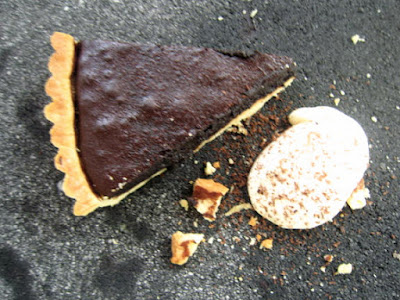
Céleste's Chocolate Tart
for a 9inch or 20-cm tart pan


For the pâte sucrée:
2 cups or 400grs of flour
pinch of salt
3/4 cup or 140grs  butter
4oz or 120grs confectioner's sugar
the seeds of 1 vanilla bean
1 egg yolk
2 Tbs of heavy cream


In a food processor, blend the sugar and the flour with the salt. Add the butter cut in small pieces, pulse, add the egg yolk, process briefly, add the cream until it forms a ball. Roll in a disk, wrap in plastic and refrigerate for 1 hour.
Preheat the oven at 350ºF or 175ºC.
When the dough is firm, sprinkle some confectioner's sugar on a surface, wait a few minutes for the dough to slightly warm up and roll very thinly, about 1/4inch. Transfer to a tart pan with a removable bottom being careful not to stretch the dough, press gently but firmly the dough against the edges of the pan so it fits tightly; cut the excess dough with a knife, prick the bottom with a fork and refrigerate 30 minutes. After that time, lay a piece of aluminium foil on the dough and fill it with beans, bake for 20 minutes. Remove the foil and beans, bake 10 minutes longer watching that the dough remains pale but cooked. Remove from the oven and let it cool. The dough is fragile, handle carefully.

For the chocolate filling:
250 grs of bittersweet chocolate
100 grs unsalted butter
2 eggs
1 egg yolk
50 grs sugar
1/3 cup heavy cream
a dash of Cointreau


In a bowl, beat with a mixer the eggs, egg yolk and sugar until thick and pale yellow.
Melt the chocolate and the butter in a bowl set over a pan of barely simmering water, stir from time to time until the butter is melted and the chocolate is glossy, add the Cointreau and let cool slightly. Add the heavy cream to the chocolate and pour this preparation in the egg mixture. Pour in the tart shell, cook for 10 minutes max until barely set. (If the top starts to crack, remove at once, it is starting to overcook). Cool until warm.

For the Crème Chantilly:
1 cup of very cold heavy cream
3Tbs confectioner's sugar
2tsp pure vanilla extract or the seeds from 1 vanilla bean


In a very cold bowl, beat the sugar, heavy cream and vanilla with a whisk until it forms soft peaks. Voilà, that's all there is to it! I guess in non-French circles, it's called sweetened whipped cream...

Serve a wedge of tart with a dollop of the Chantilly and some shavings of chocolate on top. If you were inclined to improve on something already perfect, you could, like Céleste, serve this with some strawberry sauce on the side and a little pitcher of lemon verbena Crème Anglaise.


Cannelés de Bordeaux

Cannelés are the beloved little cakes from Bordeaux, where I come from, and Céleste loves them. They are nothing short of an institution in Bordeaux and Maison Baillardran specializes in them and trust me, theirs are perfect! Like many things with ancient and humble origins, they are pretty simple to make and only require a few common ingredients. 
That said, to make a great cannelé is another story! A cannelé should be dark, caramelized and crunchy on the outside, creamy soft and sweet on the inside, redolent of rum and vanilla. Cooking them properly is tricky; letting the batter rest for at least 24 hours is mandatory, you will need to get the copper molds (forget about the silicone ones) and if you want to have a perfect crust, you need either beeswax or a professional pastry spray. 
Not to be discouraged, once you get the "tour de main", making and baking them will become easier; they are nothing more than a cross between a crêpe and a clafoutis batter baked in copper molds.


Batter for 12 cannelés:
1/2 liter ( 1/2 quart) of milk
2 vanilla beans, split
50g (2 1/2oz) butter, unsalted
250 g (8oz) sugar 
120g (4oz) flour, sifted
1 pinch of salt
2 large eggs
2 egg yolks
3Tbs Rum
Heat the milk with the vanilla beans until the boiling point, turn off the heat and add the butter.


In a bowl, mix the flour, sugar and salt, add the egg yolks and mix very gently. When incorporated, add the eggs, mix thoroughly (and gently, not whisking or beating air into it) until the batter is very smooth (no lumps allowed). Do this by hand with a wooden spoon, not an electric mixer. When smooth, add the milk with the butter (barely warm) little by little, then the rum.
Place in the fridge for at least 24 hours (48 hours is better) for the flavors to ripen and allow the air bubbles to rise  to the surface. You do not want the batter to rise when it cooks or your canelés will be ruined, we are not making popovers or a soufflé!
Strain the batter through a fine mesh sieve. Keep it cold.
Heat the oven at 240ºC or 450ºF. Grease very well the molds with either beeswax and butter (1:1 ratio, melt in a small saucepan on low heat 50grs of beeswax, when melted, turn off the heat and add the butter, coat lightly the molds with the warm mixture and invert them on a rack), baking spray or butter. Place in the freezer for 10 minutes.
After that time, pour the batter in the molds, fill until 1cm (1/2 inch) below the surface, place on a baking sheet and cook for 1 hour. The temperature is going to drop: the molds are cold, the batter is cold (in purpose), after 10 minutes, the temperature should have come back to 450ºF, lower to 200ºC or 375ºF and continue to cook for 45 minutes.
Do not underbake, do not burn, that's what tricky: too soft and pale, it's NOT a canelé! Burned, it's not a canelé either and impossible to eat! You need to know your oven and watch like a hawk towards the end (you might want to pick one out of the oven towards the end of cooking, slip it out of the mold and check the color). It's the same as making caramel: it goes from  undercooked to burned in a matter of seconds, you have to stop at perfect in the middle and practice will make perfect!
Unmold after a few minutes, let cool, wait 1 hour and EAT!


February 17, 2010

My dinner with Loulou, a French Feast in Boston


Louise Marie-Eléonore, "Loulou"


Louise is the eldest of my children. Recently, she moved to Boston to attend college. On my way up to visit her, I was daydreaming and thinking about how much I have missed her these past five months. I was so excited to see her in her first apartment.


Louise is a wondeful artist. She has the talent to turn the most mundane objects into things of beauty. The world she creates and surrounds around herself with is truly full of wonders.


Louise is soft and gentle like a deer, passionate and fiery like a wild horse.


She has an old soul, deep and wise.


She is thoughtful and kind, she always surprises me...

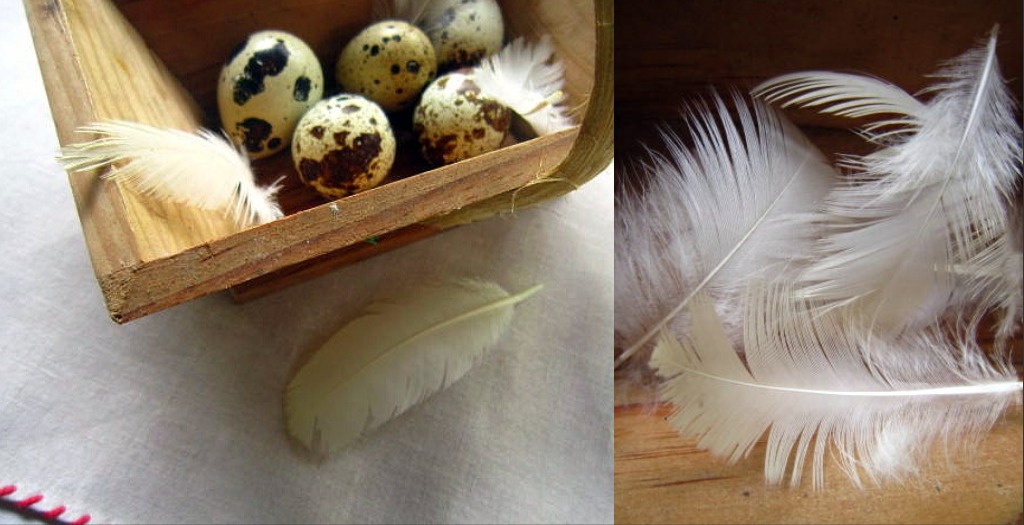
She loves birds, nests and feathers...


Sometimes, when I look at her work, it is as if I could get a glimpse into her soft soul


Her art always touches my heart.


Louise has always loved to cook and is very good at it. When we are together, we like to plan for dinner while having our morning cup of coffee. And of course, with Louise, what has been bought and brought back home must be drawn first.


During the time I was in Boston, it was very cold. We decided to make a Bouillabaisse-like fish stew one night to escape the dreadful weather and a Veal Blanquette the next one to comfort ourselves.


Fish Stew in the manner of a Bouillabaisse

Serve 8
For the broth:
2 lbs of Mussels, scrubbed
8 Littleneck Clams, scrubbed
5 shallots, peeled and chopped
2 branches od Italian parsley
2 branches of fresh thyme
1 bay leaf
1 cup of dry white wine (we used Tariquet from Bordeaux)
Sea salt to taste
Freshly ground pepper to taste


For the fish and Seafood marinade:
3/4 lb very fresh Monkfish in one thick piece
3/4 lb very fresh Cod in one thick piece
3/4 lb very fresh Swordfish
1/2 lb very fresh Sea Scallops
1/2 lb large raw Shrimps shells on 
1 tsp Fennel seeds
Fennel fronds from 1 fennel bulb
The zest and slices of 1 orange
1/4 tsp Spanish Saffron
1/4 cup Lillet (optional)
1 1/2 cup dry white wine
Sea salt to taste
Freshly ground pepper to taste


For the Stew:
1 large Onion, peeled and chopped
1 medium Fennel bulb, sliced
1 carrot, peeled and sliced
1 can San Marzano wholeTomatoes( crushed roughly)
2 cups of dried white wine
8 new baby potatoes, washed and cut in half
1 Bay leaf
2 branches fresh thyme
Sea salt to taste,
Freshly ground pepper to taste


For the Rouille:
I very fresh egg yolk
1/2 Tsp of French mustard (not French's)
3 to 4 garlic cloves, peeled and mashed with 1/4 tsp sea salt
Vegetable oil or light olive oil
2 Tsp fresh white bread crumbs, barely moistened with milk
1/4 tsp Cayenne pepper (or more to taste)

In a pan, place over medium heat the mussels, clams, shallots, salt, pepper, bay leaf and thyme. Cook until the mussels and clams start to open, add the wine and cook until all the mussels and clams are open, about 5 to 8 minutes.
Remove from the heat, let cool a little. Leave the clams whole but prepare the mussels on the half shell. Strain the broth in a bowl, reserve.


Cut all the fish in managable pieces to eat in a bite but not so small as to fall apart while cooking (we like 2 inches pieces), place them in a large non reactive dish (like Pyrex) with the shrimps and scallops. Add all the marinade ingredients: the fennel seeds and fronds, orange, saffron, Lillet if using, wine, salt and pepper. Marinate in a cool place for 1 hour, if longer, place in the refrigerator). After that time, drain and reserve the marinade.


Meanwhile, in a large heavy bottom pan ( wider than high), sweat the onion, fennel and carrot. When cooked but not colored, add the tomatoes, the reserved marinade,the wine, the bay leaf, thyme, salt and pepper, cook for 10 minutes. Add the potatoes and cook until they are tender. Add the fish, shrimps and scallops, cook 5 minutes without boiling. Add the clams and mussels, taste for seasoning.

Make the rouille; in a bowl, put the egg yolk, mustard, salt and garlic. Whisk drop by drop the oil until emulsified, add the bread and cayenne.
Whisk some of the rouille into the stew, do not let boil.

Serve in soup bowls with a spoon of rouille and thinly sliced toasted baguette.


This stew is even better reheated the day after, it is easier to make it in a large quantity but since it is so good, you won't have to worry about it sitting in the refrigerator for too long!


Blanquette de Veau (Veal Blanquette)

Blanquette comes from the word "blanc" which means white in French. Traditionally, this is a very pale dish, the veal, turnips, mushrooms, onions and broth with the egg yolk and lemon mixed in at the end result in a monochromatic dish, very mild in flavor. I like to add blanched haricots verts and young carrots and in the spring I often add peas and asparagus because I like the bite they give to the dish and I love the colors as well . It's up to you to follow tradtion and omit these or give a try to this variation.


Serve 4
For the mushrooms:
1 lb assorted mushrooms (white mushrooms are traditional but I like baby Portobella, chanterelles and morels; one kind is fine), brushed and quartered
1 Tbsp unsalted butter
Sea salt to taste

For the onions:
16 very small white onions
1 Tbs unsalted butter
2 tsp sugar

For the broth:
1 1/2 lb of veal cut in medium pieces
1 leek washed and cut in 4 pieces
1 branch of celery, washed and chopped
1 onion, peeled and studded with 3 cloves
The zest of 1/2 lemon in 1 or 2 pieces
1/2 cup of dry white wine
1 Tbs of Lillet (not traditional but nice, and I had bought a bottle for the fish stew, so I figure out, why not use it)
Sea salt to taste
1 tsp of peppercorns

For the vegetables:
1/4 lb haricots verts or very small green beans, blanched
2 carrots, peeled and sliced on the diagonal
2 small turnips, peeled and quartered

In a large pot, place all the ingredients for the broth, cover with water. Bring to a boil, reduce the heat to low and cook gently for an hour without boiling but bubbling gently, taste for seasonings. 
Drain the broth in another pan. Discard the vegetables and return the meat to the pot with the broth. place over medium/low heat, add the vegetables and cook for 10 minutes, do not let boil.
In another pan, sauté over medium/high heat the mushrooms with butter and a pinch od fresh thyme until nicely brown, deglaze with 2Tbs of the broth, add salt and pepper. Reserve.


Cook the onions in a covered pan with the butter, sugar, salt and pepper, cover with water and cook over medium/low heat until light brown, caramelized and fragrant about 10/15 minutes. Be careful they do not burn!
Add the mushrooms and onions to the broth, let the stew cook gently for 2 minutes longer.

In a small bowl, mix an egg yolk with 2 tsp of cornstarch, 1Tbs butter and the juice of half lemon, add some broth, mix again and pour in the pot (this is called a liaison), mix gently, heat for 2 more minutes and serve with plain rice.