Showing posts with label pork. Show all posts

April 8, 2011

Rejang Dewa and Lawar

Today all over Karangasem where we live, families are celebrating Odalan, the birthday of temples. On Saturday we will go pray at Pura Lumbung but today, Odalan has already started at that temple and young girls are performing Rejang Dewa (the dance for the gods), an event which takes place every year and a half.  Months ago, they started to prepare for that day.


They have been dressed amd made up since early in the morning and now they are ready to wear their beautiful gelungan (hats) made out of ental (the palm leaf which is used to make lontar, the sacred books)  Each one has been lovingly decorated with flowers by their mothers. Like the Banten, Gelungan is a tall and fragrant dedication to the gods, carried on the most sacred part of the body, the head.


The inherent grace and beauty of these young girls is always humbling to me, they naturally possess poise and dignity beyond their years.


Komang's beautiful little cousin, Iluh Mentik


On the other side of the village, since way before dawn, the men have been busy preparing Cassava Leaves Stuffing for Babi Guling, Saté and Lawar at the Banjar Dewa Mas near the temple.

Cassava Leaves Stuffing for Babi Guling

Komang's uncle (we could call him the Iron Chef of Karangasem) has been, with his two challenge ingredients "raw pork blood and bitter starfruit leaves", orchestrating the making of the mysterious Balinese Lawar.


No doubt, if you have been to Bali, you have heard about Lawar and maybe even had a chance to eat it. If not; let me explain, Lawar is mostly prepared for ceremonies and eaten as part of Megibun, the traditional shared meal. It is served as well with babi guling. It consists of roasted and boiled pork, coconut, spices, tree leaves and raw pork blood all mixed according to each Lawar master's unique recipe. Wayan Riem, Komang's uncle, is such a master and is always asked to direct and supervise its preparation. His skills, honed through a lifetime, are unsurpassed and his Lawar is reknown to be the best in the village .

Starfruit leaves and Lombok Chilies


The making of Uncle's Riem Lawar 


Wayan Riem is a very quiet man who has secrets and those are secrets he is not very inclined to share but Komang, being observant, has been able to "duplicate" his uncle's Lawar and give me a recipe that I am happy to share here. Of course, I am not really expecting anyone to make Lawar at home but for the curious and adventurous, it might be an interesting challenge. And next time you eat it, at least you will know what's in it!
Lawar


Lawar is actually a complex dish, involving the preparation of two spice pastes, Basé Gedé and Pelalah which are mixed in three different preparations: Lawar Merah (the one with raw blood), Lawar Belimbing (with starfruit leaves) and Lawar Putih (white lawar with coconut). These three Lawar are then mixed together for the finished dish pictured below. Each of these Lawar can be served on their own.


For the Basé Gedé:
500 grs. (1lb) of shallots, peeled and finely sliced
200 grs. ( 7oz) of garlic, peeled and finely sliced
6 long red chilies, sliced
125grs ( 4.5oz) of fresh ginger, peeled and finely chopped
100grs ( 3.5oz)  of fresh galangal, peeled and finely chopped
50grs (2oz) of kencur, chopped (omit if unavailable
5 candlenuts, chopped
1 Tbs roasted shrimp paste (wrap in aluminium foil and roast over a flame until pungent)
2 tsp sea salt
80 ml (3.5oz) coconut oil or bland oil
Mix all the ingredients together by hand except the oil. Add the oil in a frying pan and cook the ingedients until fragrant. Set aside.

For the Pelalah:
200grs (7oz) garlic, peeled and roughly chopped
100grs (3.5oz) kencur (omit if anavailable)
75grs (3oz) fresh turmeric, peeled and roughly chopped
5 candlenuts, chopped
2 tsp sea salt
2 tsp roasted shrimp paste
80 ml (3.5oz) bland oil
In a mortar, place all the ingredients, except the oil, and grind into a rough paste. Add the oil in a frying pan and cook the paste until fragrant. Set aside.

 Lawar Merah


200grs (7oz) of pork rind, cleaned and boiled with a pinch of salt for 30 minutes
200grs (7oz) of pork meat with some fat, chopped finely and fried
100ml (3,5oz) of fresh pork blood
5 Tbs Basé Gedé 
3 Tbs Pelalah
4 Tbs of shallots, peeled, sliced finely, deep-fried until golden and drained
3 or 4 bird's eye chilies, chopped finely
1 tsp roasted shrimp paste
Juice of 1 calamondin lime or regular lime
Sea salt to taste

Mix well the meats and the blood together, add the basé gedé, pelalah, chilies, shrimp paste, fried shallots and lime juice. Mix well again. Tase and adjust for salt and eventually chilies.

Lawar Belimbing


500grs ( 17oz) of Starfruit leaves, washed and boiled for 5 minutes
1 1/2 cup of fresh coconut milk (good canned coconut will do if fresh is unavailable)
200grs (7oz) of pork meat with some fat, boiled 15 minutes
4 Tbs Basé Gedé
3 Tbs Pelalah
3 Tbs deep fried shallots (as described in above recipe)
3 bird's eye chilies, sliced finely
1 tsp roated shrimp paste
Juice of 1 Calamondin lime or regular lime if unavailable
Sea salt to taste

Once the starfruit leaves are boiled, rinse them under cold water and squeeze the water out, do this 3 times, it will help remove some of the bitterness.
Boil the coconut milk until thickened, about 10 minutes, cool and set aside.
Chop the meat in small pieces, set a side.

Mix the meat, coconut milk and the sarfruit leaves. Once mixed, add the basé gedé, pelalah, shallots, chilies, shrimp paste and lime and mix again. Taste and adjust the seasonings. Set aside. 

Lawar Putih


1/2 fresh coconut, meat grated
150grs (5oz) of fried pork meat with some fat, chopped in small slices
150 grs (5oz) boiled pork meat with some fat, chopped in small slices
4 Tbs Basé Gedé
3 tbs Pelalah
4/5 Tbs deep-fried shallots
3 bird's eye chilies, finely sliced
Juice of 1 calamondin lime or regular lime
1 tsp roasted shrimp paste
Sea salt to taste
Mix the coconut meat and the meats. Add all the other ingredients except salt. Taste and adjust the seasonings if needed. Set aside.

For the finished  Lawar, mix 1/3 of each preparation above ( Lawar merah, lawar belimbing and lawar putih) and serve with steamed rice.


January 27, 2011

Rice, two ways: Nasi goreng and Nasi Kuning

One of the first things we prepare every morning is the rice. My mother in-law, Ibu Boni, still makes Nasi for the day the traditional way: soaked, steamed in a conical bamboo basket in an aluminium pot set over a wood fire, soaked again and steamed one last time.


This rice has a wonderful flavor, due to the firewood and the method of cooking, resulting in a delicious and perfect rice, fluffy with each grain separate; a lifetime of experience that I have yet to master.
We use an electric rice cooker and the results, if different, are quite good. Think a crusty sourdough Pain de Campagne versus a supermarket one!
When we have left over rice, Komang makes Nasi Goreng (his way) and when we have lots of time, I make Nasi Kuning (my way).

Nasi Goreng is simply fried rice, done the Indonesian way. Every family has their own recipe and way to prepare it.


Komang's Nasi Goreng
serve 2

2 cups of cooked rice, room temperature
6 oz of chicken, pork or shrimps chopped
1 cup finely sliced cabbage
1/2 carrot, chopped finely
2 pieces of bok choi, chopped
5 shallots, finely chopped
2 garlic cloves, finely chopped
1 tsp rice vinegar
1 Tbs kecap manis
1 tsp fish sauce
3 tsp kecap asin or light soy sauce
sea salt and pepper to taste

For the nasi goreng sauce:
1 large red chile, chopped
3 bird's eye chile, chopped
1 tomato, chopped
6 garlic cloves, chopped
1 tsp shrimp paste
1 Tbs coconut oil or mild oil
some water

In a pan, place all the ingredients for the nasi goreng sauce, except the water. Cook over a medium flame until fragrant, about 5/8 minutes, add some water if needed. Place in a blender and mix until smooth.
Place the rice in a bowl, add the nasi goreng sauce as well as the rice vinegar, fish sauce, kecap manis and soy sauce. Mix and set aside.
In a wok set over a medium flame, put 2 Tbs of oil and fry the meat for 2 or 3 minutes until golden, add the shallots and garlic. Then add the rice with the sauce and seasonings as well as the vegetables. Toss around until thoroughly mixed, add salt and pepper. Continue tossing with a spatula until the vegetables are wilted but still crunchy and the rice is piping hot. Serve with a garnish of fried shallots, peanuts, cucumber slices and fried egg if desired.


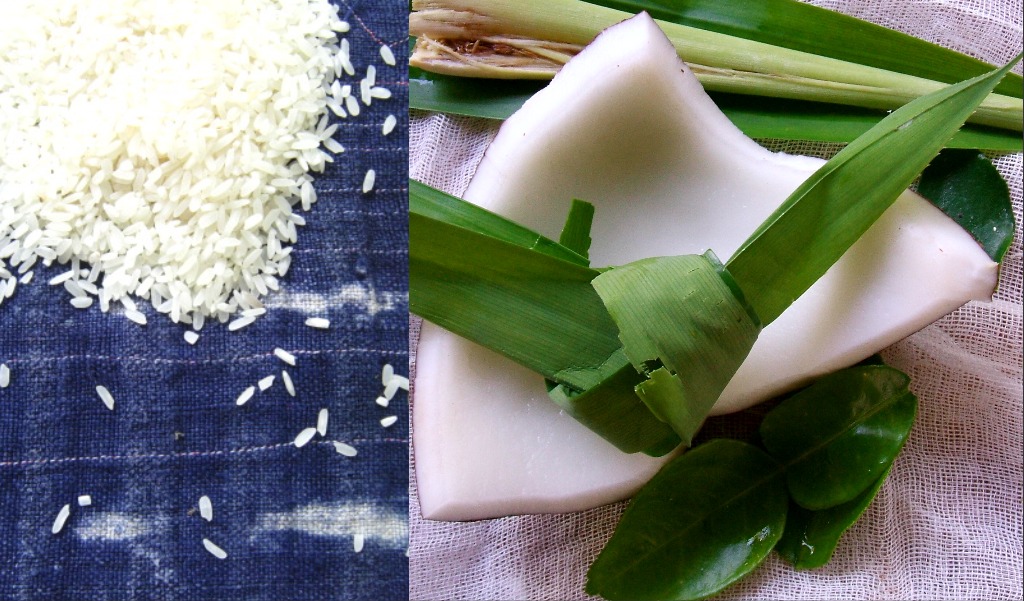
Nasi Kuning is rice cooked with spices, herbs and fresh coconut milk. It is, once cooked, mixed with sambal, more herbs, fried shallots, chilies and some lime juice. This dish is fragrant and delicious and my absolute favorite thing to serve with grilled fish, prawns and duck. It is truly heavenly and you should try it, at least once. 


Nasi Kuning
serve 4
To steam the rice:

3 cups of rice, washed and drained
2 1/2 cups of water
1 1/2 cup of fresh coconut milk or canned coconut milk
2 sticks of lemongrass, bruised with the flat side of a heavy knife
1 large knob of fresh turmeric, grated, juice expelled and added to the water
3 slices of fresh ginger, bruised
1 small stick of cinnamon
6 cardamom pods
3 daun salam (omit if unavailable)
1 pandan leaf (screwpine), tied in a knot (omit if unavailable)
1 leaf of turmeric (omit if unavailable)
1 large pinch of coarse sea salt

In an electric rice cooker, place all the ingredients and cook. Once cooked, un-plug the machine, open the lid and, with a rice paddle, fluff the rice. Close the lid again and wait 10 minutes.

Kasuna-Cekoh


2 Tbs turmeric, chopped (omit if unavailable and increase the kencur to 3 Tbs)
2 Tbs  kencur (cekoh) replace with galanga if unavailable
10 garlic cloves (kasuna)
3 candlenuts
In a mortar, grind all the ingredients to a paste, you could use a food processor if prefered.
In a frying pan, heat 3 Tbs of oil and fry the paste, stirring constantly until it becomes glossy and fragrant, about 4/5 minutes. Drain the oil and leave to cool.

To mix in the rice:
the prepared kasuna-cekoh
5 shallots, finely sliced, deep fried in oil until golden and drained
3 kaffir lime leaves finely, sliced
1 small bunch of lemon basil, leaves only, shredded
the juice of 2 calamondin limes or 1 regular lime
salt to taste
1 Tbs Sambal Goreng ( you could use 2 or 3 bird's eye chilies, very finely chopped)
2 Tbs Sambal Kecicang or 1 torch ginger flower, finely sliced (omit if unavailable)

Place the rice in a bowl, remove all the herbs and spices it was cooked with and add all the ingredients above. Taste, adjust if necessary and serve. Heaven!


December 8, 2010

Celebrating Odalan


Kori
I have been going back and forth between 3 continents for the past few months and it feels really good to be back in Bali. In three days, Komang's family will be celebrating Odalan, the anniversary of the family temple.

Temple dressed for Odalan


 For this occasion, which occured about every 6 months or so, many preparations have to be done beforehand and we start very early in the morning making Banten, which are the  traditional offerings, all the while drinking coffee, chatting and joking.


Odalan is a happy time of family gathering and honoring the gods
                          
A lot of cooking has to be done as well to feed all the helpers for breakfast. And this happens in the beautiful kitchen of Komang's aunt, Ibu Kelemun. I love being in this dark room watching dishes after dishes being cooked on the old wood burning stove with blackened pots and woks.


Low benches lie on one side where spice pastes are prepared in volcanic stone mortars and hiding within small wooden cupboards, one can always find the pungent terasi, the sour and sweet lunak, the kasuna, bawan merah, the laos, kunyit and jahe, the basic aromatics of Balinese cooking.


Out of this very simple kitchen by Western standards, complex sambals and fragrant dishes come out, one after the other, effortlessly. This reminds me of my grandmother's kitchen in France where most of the cooking was done in the fireplace in earthenware pots and in which, as a child, I always felt safe, nurtured and comforted.


In the meantime, on the other side of the road at the Banjar (the village meeting hall where people gather to discuss village matters and prepare food for ceremonies), men are busy preparing the spice pastes for the different meats, making lawar, skewering chickens and grilling the satés, all in a perfect harmony like a dance known by heart,  with the background music of the knives chopping rythmically.

Preparing the meat for saté

Working the line Bali style

Chickens waiting to be grilled

Made Mudre  working solo
Saté
Saté Lilit
Saté Asam
Grilling saté
                                                     
            Not very far, the Babi Guling crew is at work, cleaning and preparing the babi for the pit.


Babi Guling is the ultimate beloved Balinese dish of a suckling pig rubbed in fresh turmeric paste, stuffed with cassava leaves and spices. It is spit roasted for hours over an open fire of coconut husks to a delicious perfection: the meat succulent, juicy and tender with a hint of milkiness; the skin crispy, shattering in the mouth with an explosion of flavor, a thin layer of quivering and translucent fat underneath melting on your tongue; the stuffing, slightly bitter, a little bit sweet and hot providing the counterpoint and balance of the whole dish. 
It is pure heaven and no ceremony is complete without at least one Babi Guling. So much luck that the gods are content with the Sari, the emanation of the offerings, and that us, mortals, can partake on their leftovers!


Babi Guling
Balinese Roasted Suckling Pig
serve 25 people


1 15 lbs suckling pig, cleaned
1 1/2 Tbsp sea salt
3oz fresh turmeric, chopped and grind
1/2 cup water
1/4 cup coconut oil

Stuffing:
2 lbs cassava leaves, cleaned, blanched for 5 minutes and chopped
12 oz of shallots, sliced
15 garlic cloves, finely chopped
6 long red chilies, finely sliced
15 to 20 bird's eye chilies, finely sliced
3 oz fresh turmeric, chopped
5 oz galanga, finely chopped
2 oz lesser galanga, finely chopped
4 oz fresh ginger, finely chopped
12 candlenuts, chopped
10 salam leaves, chopped
5 kaffir lime leaves, finely sliced
10 stalks lemongrass, chopped
2 oz tamarind paste
1 Tbs shrimp paste, roasted and crumbled
1 Tbsp peppercorns, crushed
3 Tbsp coriander seeds, crushed
1 Tbs sea salt

Combine the turmeric with the water and oil and process in a blender until smooth. Strain the liquid and press to extract all the liquid, set aside in a bowl.
Rub the pig, inside and out, with the salt.
Combine all the ingredients for the stuffing and fill the pig cavity with the mixture. Close the cavity by either sewing it with a trussing needle and string or with bamboo skewers.
Brush the outside of the suckling pig with the turmeric mixture.
Place on a roating rack in  the center of a preheated oven at 375 degrees F for 1/2 hour, baste with some of the turmeric mixture and turn the pig over, continue to cook for another 1/2 hour, baste again, lower the temperature at 350 degrees F and cook another 1 to hour longer, basting occasionally, the skin should be crispy and golden and when pierced, the juices should run clear.
Let rest for 15 minutes in a warm place.  Remove the string and place the stuffing in a bowl.


Carve the skin and some fat first and then carve the rest of the meat.


Serve with rice, some stuffing, skin and fat and some pieces of meat.


shrine in Jasri beach