Showing posts with label bali. Show all posts

April 8, 2011

Rejang Dewa and Lawar

Today all over Karangasem where we live, families are celebrating Odalan, the birthday of temples. On Saturday we will go pray at Pura Lumbung but today, Odalan has already started at that temple and young girls are performing Rejang Dewa (the dance for the gods), an event which takes place every year and a half.  Months ago, they started to prepare for that day.


They have been dressed amd made up since early in the morning and now they are ready to wear their beautiful gelungan (hats) made out of ental (the palm leaf which is used to make lontar, the sacred books)  Each one has been lovingly decorated with flowers by their mothers. Like the Banten, Gelungan is a tall and fragrant dedication to the gods, carried on the most sacred part of the body, the head.


The inherent grace and beauty of these young girls is always humbling to me, they naturally possess poise and dignity beyond their years.


Komang's beautiful little cousin, Iluh Mentik


On the other side of the village, since way before dawn, the men have been busy preparing Cassava Leaves Stuffing for Babi Guling, Saté and Lawar at the Banjar Dewa Mas near the temple.

Cassava Leaves Stuffing for Babi Guling

Komang's uncle (we could call him the Iron Chef of Karangasem) has been, with his two challenge ingredients "raw pork blood and bitter starfruit leaves", orchestrating the making of the mysterious Balinese Lawar.


No doubt, if you have been to Bali, you have heard about Lawar and maybe even had a chance to eat it. If not; let me explain, Lawar is mostly prepared for ceremonies and eaten as part of Megibun, the traditional shared meal. It is served as well with babi guling. It consists of roasted and boiled pork, coconut, spices, tree leaves and raw pork blood all mixed according to each Lawar master's unique recipe. Wayan Riem, Komang's uncle, is such a master and is always asked to direct and supervise its preparation. His skills, honed through a lifetime, are unsurpassed and his Lawar is reknown to be the best in the village .

Starfruit leaves and Lombok Chilies


The making of Uncle's Riem Lawar 


Wayan Riem is a very quiet man who has secrets and those are secrets he is not very inclined to share but Komang, being observant, has been able to "duplicate" his uncle's Lawar and give me a recipe that I am happy to share here. Of course, I am not really expecting anyone to make Lawar at home but for the curious and adventurous, it might be an interesting challenge. And next time you eat it, at least you will know what's in it!
Lawar


Lawar is actually a complex dish, involving the preparation of two spice pastes, Basé Gedé and Pelalah which are mixed in three different preparations: Lawar Merah (the one with raw blood), Lawar Belimbing (with starfruit leaves) and Lawar Putih (white lawar with coconut). These three Lawar are then mixed together for the finished dish pictured below. Each of these Lawar can be served on their own.


For the Basé Gedé:
500 grs. (1lb) of shallots, peeled and finely sliced
200 grs. ( 7oz) of garlic, peeled and finely sliced
6 long red chilies, sliced
125grs ( 4.5oz) of fresh ginger, peeled and finely chopped
100grs ( 3.5oz)  of fresh galangal, peeled and finely chopped
50grs (2oz) of kencur, chopped (omit if unavailable
5 candlenuts, chopped
1 Tbs roasted shrimp paste (wrap in aluminium foil and roast over a flame until pungent)
2 tsp sea salt
80 ml (3.5oz) coconut oil or bland oil
Mix all the ingredients together by hand except the oil. Add the oil in a frying pan and cook the ingedients until fragrant. Set aside.

For the Pelalah:
200grs (7oz) garlic, peeled and roughly chopped
100grs (3.5oz) kencur (omit if anavailable)
75grs (3oz) fresh turmeric, peeled and roughly chopped
5 candlenuts, chopped
2 tsp sea salt
2 tsp roasted shrimp paste
80 ml (3.5oz) bland oil
In a mortar, place all the ingredients, except the oil, and grind into a rough paste. Add the oil in a frying pan and cook the paste until fragrant. Set aside.

 Lawar Merah


200grs (7oz) of pork rind, cleaned and boiled with a pinch of salt for 30 minutes
200grs (7oz) of pork meat with some fat, chopped finely and fried
100ml (3,5oz) of fresh pork blood
5 Tbs Basé Gedé 
3 Tbs Pelalah
4 Tbs of shallots, peeled, sliced finely, deep-fried until golden and drained
3 or 4 bird's eye chilies, chopped finely
1 tsp roasted shrimp paste
Juice of 1 calamondin lime or regular lime
Sea salt to taste

Mix well the meats and the blood together, add the basé gedé, pelalah, chilies, shrimp paste, fried shallots and lime juice. Mix well again. Tase and adjust for salt and eventually chilies.

Lawar Belimbing


500grs ( 17oz) of Starfruit leaves, washed and boiled for 5 minutes
1 1/2 cup of fresh coconut milk (good canned coconut will do if fresh is unavailable)
200grs (7oz) of pork meat with some fat, boiled 15 minutes
4 Tbs Basé Gedé
3 Tbs Pelalah
3 Tbs deep fried shallots (as described in above recipe)
3 bird's eye chilies, sliced finely
1 tsp roated shrimp paste
Juice of 1 Calamondin lime or regular lime if unavailable
Sea salt to taste

Once the starfruit leaves are boiled, rinse them under cold water and squeeze the water out, do this 3 times, it will help remove some of the bitterness.
Boil the coconut milk until thickened, about 10 minutes, cool and set aside.
Chop the meat in small pieces, set a side.

Mix the meat, coconut milk and the sarfruit leaves. Once mixed, add the basé gedé, pelalah, shallots, chilies, shrimp paste and lime and mix again. Taste and adjust the seasonings. Set aside. 

Lawar Putih


1/2 fresh coconut, meat grated
150grs (5oz) of fried pork meat with some fat, chopped in small slices
150 grs (5oz) boiled pork meat with some fat, chopped in small slices
4 Tbs Basé Gedé
3 tbs Pelalah
4/5 Tbs deep-fried shallots
3 bird's eye chilies, finely sliced
Juice of 1 calamondin lime or regular lime
1 tsp roasted shrimp paste
Sea salt to taste
Mix the coconut meat and the meats. Add all the other ingredients except salt. Taste and adjust the seasonings if needed. Set aside.

For the finished  Lawar, mix 1/3 of each preparation above ( Lawar merah, lawar belimbing and lawar putih) and serve with steamed rice.


February 13, 2011

Balinese Offerings: Canang and Banten


Yesterday morning, I woke up early and headed to Komang's uncle house to prepare the Canang and Banten, the traditional Balinese offerings. Everyone was already busy at work cutting the tips of the bananas and washing them, preparing all the flowers and organizing the jaja and fruits.


There are many different offerings and all have a symbolic meaning and a specific purpose. Every one knows exactly how to make them but I have to say that I progress slowly regarding the detailed explanation of each one of them. I am always torn, in these occasions, between learning and being respectful. It is not that people don't know or are not patient to explain, it is just that they have always done this; it is a tradition passed down and acquired since childhood, gestures learned and done with care, love and respect but not intellectualized in the Western sense.


 I just marvel at their beauty and have learned the proper way to make them without knowing exactly why they are each done a certain way.


What I do know is that they are all a gift from the heart to the gods, made as beautiful as possible.
They connect humans to the unseen world and bring balance and harmony between the positive and negative forces, they are a symbol of love and devotion. 


I am always touched by their evanescent beauty. Like Tibetan Mandalas, they are not meant to last, just to remind us to give our best every day because of love and belief. 


And doing this repetitively gently teach patience and surrender to something bigger. I learned it does not work to hurry or to do it to get done with it, better not doing it then. It certainly changed my perspective on life... And if I still don't exactly know what I am doing, I know it's beautiful!


January 27, 2011

Rice, two ways: Nasi goreng and Nasi Kuning

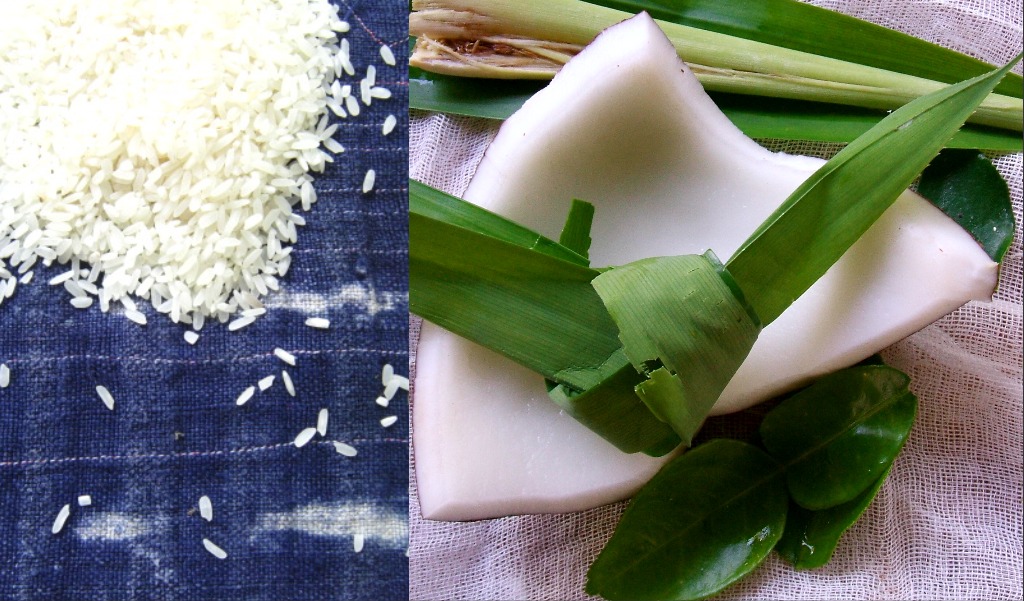
One of the first things we prepare every morning is the rice. My mother in-law, Ibu Boni, still makes Nasi for the day the traditional way: soaked, steamed in a conical bamboo basket in an aluminium pot set over a wood fire, soaked again and steamed one last time.


This rice has a wonderful flavor, due to the firewood and the method of cooking, resulting in a delicious and perfect rice, fluffy with each grain separate; a lifetime of experience that I have yet to master.
We use an electric rice cooker and the results, if different, are quite good. Think a crusty sourdough Pain de Campagne versus a supermarket one!
When we have left over rice, Komang makes Nasi Goreng (his way) and when we have lots of time, I make Nasi Kuning (my way).

Nasi Goreng is simply fried rice, done the Indonesian way. Every family has their own recipe and way to prepare it.


Komang's Nasi Goreng
serve 2

2 cups of cooked rice, room temperature
6 oz of chicken, pork or shrimps chopped
1 cup finely sliced cabbage
1/2 carrot, chopped finely
2 pieces of bok choi, chopped
5 shallots, finely chopped
2 garlic cloves, finely chopped
1 tsp rice vinegar
1 Tbs kecap manis
1 tsp fish sauce
3 tsp kecap asin or light soy sauce
sea salt and pepper to taste

For the nasi goreng sauce:
1 large red chile, chopped
3 bird's eye chile, chopped
1 tomato, chopped
6 garlic cloves, chopped
1 tsp shrimp paste
1 Tbs coconut oil or mild oil
some water

In a pan, place all the ingredients for the nasi goreng sauce, except the water. Cook over a medium flame until fragrant, about 5/8 minutes, add some water if needed. Place in a blender and mix until smooth.
Place the rice in a bowl, add the nasi goreng sauce as well as the rice vinegar, fish sauce, kecap manis and soy sauce. Mix and set aside.
In a wok set over a medium flame, put 2 Tbs of oil and fry the meat for 2 or 3 minutes until golden, add the shallots and garlic. Then add the rice with the sauce and seasonings as well as the vegetables. Toss around until thoroughly mixed, add salt and pepper. Continue tossing with a spatula until the vegetables are wilted but still crunchy and the rice is piping hot. Serve with a garnish of fried shallots, peanuts, cucumber slices and fried egg if desired.


Nasi Kuning is rice cooked with spices, herbs and fresh coconut milk. It is, once cooked, mixed with sambal, more herbs, fried shallots, chilies and some lime juice. This dish is fragrant and delicious and my absolute favorite thing to serve with grilled fish, prawns and duck. It is truly heavenly and you should try it, at least once. 


Nasi Kuning
serve 4
To steam the rice:

3 cups of rice, washed and drained
2 1/2 cups of water
1 1/2 cup of fresh coconut milk or canned coconut milk
2 sticks of lemongrass, bruised with the flat side of a heavy knife
1 large knob of fresh turmeric, grated, juice expelled and added to the water
3 slices of fresh ginger, bruised
1 small stick of cinnamon
6 cardamom pods
3 daun salam (omit if unavailable)
1 pandan leaf (screwpine), tied in a knot (omit if unavailable)
1 leaf of turmeric (omit if unavailable)
1 large pinch of coarse sea salt

In an electric rice cooker, place all the ingredients and cook. Once cooked, un-plug the machine, open the lid and, with a rice paddle, fluff the rice. Close the lid again and wait 10 minutes.

Kasuna-Cekoh


2 Tbs turmeric, chopped (omit if unavailable and increase the kencur to 3 Tbs)
2 Tbs  kencur (cekoh) replace with galanga if unavailable
10 garlic cloves (kasuna)
3 candlenuts
In a mortar, grind all the ingredients to a paste, you could use a food processor if prefered.
In a frying pan, heat 3 Tbs of oil and fry the paste, stirring constantly until it becomes glossy and fragrant, about 4/5 minutes. Drain the oil and leave to cool.

To mix in the rice:
the prepared kasuna-cekoh
5 shallots, finely sliced, deep fried in oil until golden and drained
3 kaffir lime leaves finely, sliced
1 small bunch of lemon basil, leaves only, shredded
the juice of 2 calamondin limes or 1 regular lime
salt to taste
1 Tbs Sambal Goreng ( you could use 2 or 3 bird's eye chilies, very finely chopped)
2 Tbs Sambal Kecicang or 1 torch ginger flower, finely sliced (omit if unavailable)

Place the rice in a bowl, remove all the herbs and spices it was cooked with and add all the ingredients above. Taste, adjust if necessary and serve. Heaven!


January 17, 2011

Cool, crunchy and spicy on a rainy day


We have had rain for over a month here in Bali; the humidity is high, the spirits are getting low and everyone watches the sky hoping that today will be different and wondering if it will ever stop.
A visit to Komang's cousin who has a small warung up the street from our house is what I need, just seeing all the packaged goodies cheer me up. In this tiny place one can find all kind of snacks and there, I  feel like a child in a candy store, what to choose is always difficult.


I will order extra spicy rujak with tamarind, es campur with crunchy seaweed, es jeruk, little bags of krupuk and, while waiting, we will chat about the weather...

Rujak


Rujak can be made with a fruit and vegetable mix of your choice: crunchy apple, snakefruit, tomato, starfruit, pineapple, mango, cucumber or carrot, all slightly under-ripe and grated or sliced in bite size pieces. It is delicious, refreshing (and slightly addictive due to the chilies) on its own but we love it with grilled meat as well. Think barbecued ribs or grilled Porterhouse steak, medium rare and thinly sliced against the grain with this salad. Haaaa, I almost forgot the rain (can't grill)!

In a mortar, grind 3 (or 5 for the hard core chili lovers) bird's eye chilies, some sea salt and 1/4 tsp roasted shrimp paste. Add 3 Tbs tamarind paste, 2 Tbs palm sugar, and lime juice. Taste and adjust to your liking, it should have a balance between sweet, sour, hot and spicy, but definitely be on the hot side.


Es Campur and Krupuk


Es Jeruk 


2 sour oranges or 1 orange and 2 limes, sugar syrup to your liking, ice cubes and water.
In a pan, melt equal parts of sugar (or palm sugar with water) with a vanilla bean, boil for one minute, turn off the heat. Once cooled, pour the strained juice of the oranges and limes in a cup, add some sugar syrup, top with ice and water. Stir, taste. It should be sweet and sour and completely delicious!

And waiting for the sun to shine again, I will make some fresh hibiscus and jasmine tea for us after snacks.


Wishing you all a beautiful day!