April 21, 2010

Chicken Curry forever

The first "exotic" dish I ever cooked was Chicken Curry, I was eleven years old and had just acquired my very first cookbook;  it was a small compilation of recipes from India, China and Sri Lanka as well as tidbits of lore and history.


And I'm pretty sure that's when it all started, this insatiable curiosity for far away lands which became the unraveling thread of my itinerant life. Blame it on that  book and on Ibn Battuta too!


That what path my life would take, was decided early on because of a wondrous spice and the extraordinary journeys of a 14th century traveler, makes perfect sense to me. Both left me dazzled and forever wanting more. I would travel and I would cook! (In the meantime, reading would do).
I still remember this chicken curry, it took me three days, with my mom's help, to source the ingredients and one full day to make but it was worth it. It tasted of the unknown and made me dream.

I have had many curries over the years, from many different places but still, my favorite remains Balinese Chicken Curry and like the one from my childhood, this is what I call an "involved" recipe.
The first step is to find a chicken, kill it and prepare it. Then it has to be rubbed with garlic, turmeric and tamarind and grilled over a fire of coconut coals.


 Once cooled, it is chopped in bite size pieces.


 To prepare the fresh coconut milk, a coconut has to be cracked open and the meat has to be grated and squeezed by hand until the sweet flesh turns into milk.


All the curry ingredients have to be crushed in the stone mortar and the paste is tasted until the perfect balance between the garlic, turmeric and kencur, the dominant flavors of this curry and the lower supportive notes of sweet, sour and spicy of the tamarind, palm sugar and chilies is achieved.


The process of cooking is relatively simple and quick after all this preliminary work and we can soon sit down and enjoy Chicken Curry. Ahhhhhhh, sooo good and this time, I'm not dreaming!

 Be Siap Mesanten (Balinese Chicken Curry)

1 chicken, around 2lbs, ready to be cooked

5 cloves garlic, crushed
1Tbs fresh turmeric, grated
1 lemongrass stalk, crushed
1 tsp sea salt
2 tsp coconut oil

3 cups of fresh coconut milk
2 Salam leaves 

Curry paste:
5 garlic cloves
2 Tbs fresh turmeric, roughly chopped
2 tsp kencur, roughly chopped
3 candle nuts
10 bird's eye chilies (or less if you do not like it hot)
3 long red chilies
1/4 tsp shrimp paste
1 to 2 tsp of palm sugar, grated
2 tsp sea salt

Make a paste of the turmeric, garlic, sea salt and coconut oil; rub the chicken all over. Prepare the fire, when it is ready, grill the chicken, turning and basting with the marinade, until cooked and nicely charred.
Once cooked, leave it to cool. Prepare the curry paste. Grind all the ingredients in a mortar with a pestle until well blended.
Chop the chicken in bite size pieces.
In a pan, heat the coconut milk, add the curry paste and the salam leaves, cook until fragrant.


Add the chicken, lower the heat and cook another 10/15 minutes until the sauce is thickened.
Serve with steamed rice.


Bali circa 1760


April 16, 2010

Making Rajang


Gunung Agung

Today, we went for a ride in beautiful Seraya and on our way back we stopped to see our favorite fisherman in Ujung.


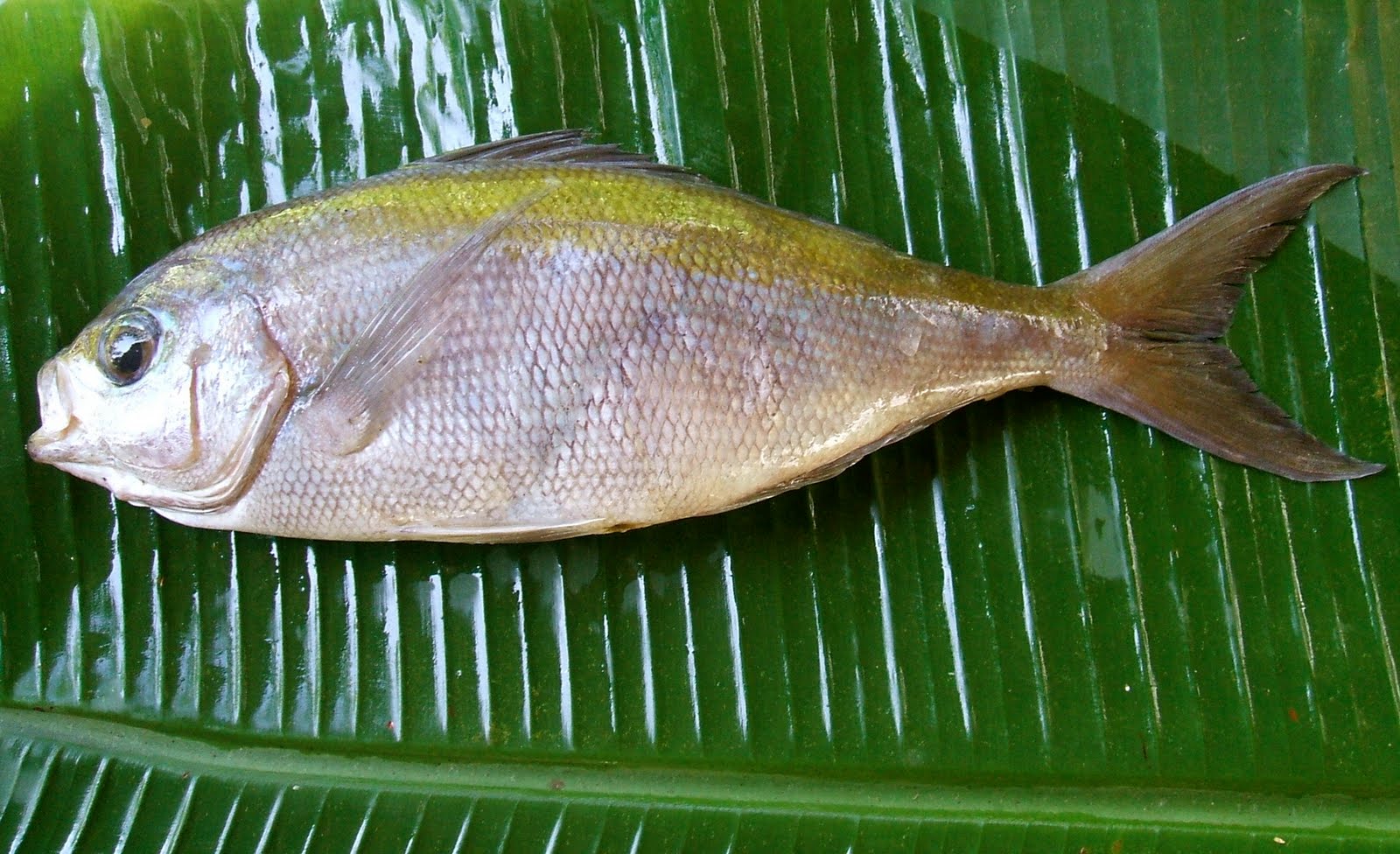
 He was back with a great catch, fish barely out of the water, we bought some on the spot and decided to make Rajang.


Rajang, also known as Pepes Ikan in the rest of Indonesia, is a dish of fish mixed with a spice paste redolent of galangal, turmeric, chilies and tamarind wrapped in banana leaves and grilled over coconut coals.

wrapping the parcels


parcel ready to be grilled

I absolutely adore the taste layers of the spice paste: the sweet, sour, hot and clean lemony flavors of the tamarind, lemongrass and chilies mixed with the balsamic, camphor like haunting fragrance of the galangal and kencur; the whole balanced by the grounding sweet taste of fresh turmeric.
It is simply addictive and I have been known to greedily splurge on all the bumbu when no one is watching (but someone is always watching...)

Rajang

Spice paste for Rajang

serve 4

2 lbs of very fresh, firm fish whole, or in fillets
Banana leaves for wrapping, substitute parchment paper for baking or aluminium foil for grilling.
Fresh Daun Salam, substitute fresh Bay leaves or omit altogether

Spice paste (bumbu):

10 cloves garlic, chopped finely
15 shallots, sliced finely
3 Tbsp ginger, chopped finely
3 Tbsp galangal, chopped finely
2 Tbsp lesser galangal, finely chopped
2 tsp kencur, chopped finely
2 tsp fresh turmeric, chopped finely
2 lemongrass stalks, soft part, very finely sliced
3 candlenuts, chopped finely
4 kaffir lime leaves, finely shredded
2 Tbsp tamarind pulp, soaked in a little water to soften, seeds removed
10 bird's eye chilies, sliced finely
2 Tbsp Palm sugar, chopped
1 tsp sea salt
2 Tbsp Coconut oil or light vegetable oil


fresh turmeric

Cut the fish in large pieces and set aside.
Place all the bumbu ingredients and salt in a large bowl, mix together with your hand, squeezing a little, add the oil. Taste, adjust the salt or seasonings if needed.
Rub the fish pieces with the paste.
Cut the banana leaves into pieces 4inx4in. On each piece of banana leaf, place a salam leaf (or fresh bay leaf) and 2 pieces of fish and some bumbu, wrap as described in the pictures above.
Grill for 10 minutes, test one parcel to see if it's cooked. Serve with steamed rice


March 28, 2010

Pasir Putih, the White Sands Beach


On Sundays mornings, Komang and I wake up with the sunrise and after a cup of coffee, head down to Pasir Putih, a short bike drive from our house.


At that time, we have the beach to ourselves, sand untouched,  turquoise water glistening in the morning sun. This is a place of serene beauty, unspoiled, peaceful, close to my heart and where I always want to return to.


Pasir Putih is a natural harbor, safely guarded by high cliffs of volcanic stone where many fishermen keep their boats. I love walking on the beach and looking at these beautiful little boats with their carved fish heads and brightly painted eyes to guide the fishermen through the night.


When we see the jukungs coming back towards the shore, we go to meet them and buy some of the fish they just caught.


Most of the time, it is awan (a kind of mackerel) 


but sometimes, we are in luck and they have caught snapper or umah umah, the most delicious fish for grilling.


Small warungs dot the beach, they are simple places where the freshest fish and seafood is served grilled and accompanied by the mandatory mie goreng (fried noodles) or nasi goreng (fried rice) with sambal and iced tea.


Mie Goreng with Prawns

Serves 2
4 raw prawns, peeled and chopped
1 carrot, julienned
1 1/2 cup of julienned cabbage
3 garlic cloves, peeled and chopped
2 shallots, peeled and chopped
2 bird's eye chlies finely sliced
1 tsp fish sauce
1 tsp kecap manis (sweet soy sauce) 
1 tsp kecap asin (light soy sauce)
1 tsp hot sauce (optional)
1/2 tsp toasted sesame oil
1 scallion, finely sliced for garnish
1 package of  ramen style noodles

Boil the noodles for 3 or 4 minutes, drain. Blanch the cabbage and carrot for 1 minute, drain. Heat the vegetable oil in a wok and sauté the shallots, garlic and prawns until fragrant, add the kecap manis, kecap asin, fish sauce and sesame oil. Add the noodles, hot sauce and chilies. garnish with the scallion and serve.


March 27, 2010

Nengah Madu and Honey from the Temple


A few months ago, I was stirred in my sleep by a familiar buzzing sound that I could not place, a persistent humming very close to me, near my head actually, bzzzzzz, bzzzzzzzz, what could it be, I wondered? It was still dark, just before dawn. The humming was gentle and soothing but getting stonger by the minute.
Fully awake by then, I realized we were surrounded by hundreds of bees! A bee colony had decided to make our bed their new home!
What to do? Bees are sacred in Bali and believed to bring good fortune but we could not imagine going to sleep every night in their company. Komang decided to call his cousin, Nengah Madu, named so (madu means honey) because he has a way with bees since he was a child and can handle them without any harm done to himself or the bees whatsoever.


He came a while later, installed a bee house in the frangipani tree just outside the bedroom and moved them, we watched in wonder as the swarm moved outside of the bedroom.


Ahhhhhhh,  it's done, we thought! But no, we were wrong, the bees did not like this place,  they went back to the room and then, a few went straight to the temple, checked the location and finally decided this was an acceptable home for settling down.
Now, every night when we pray, Komang gives offerings to the bees who are in good company near Shiva, Brahma and Vishnu.


During midday, at the hottest time, we can see hundreds of them busy bringing pollen and fanning the hive, we think they must live in the Ijuk roof of the temple.
Very near this location, another small temple sits to protect the land and some of the bees have set residence in it. Every now and then, when it is almost impossible to place offerings there, Nengah Madu comes and takes out some of the honeycombs.


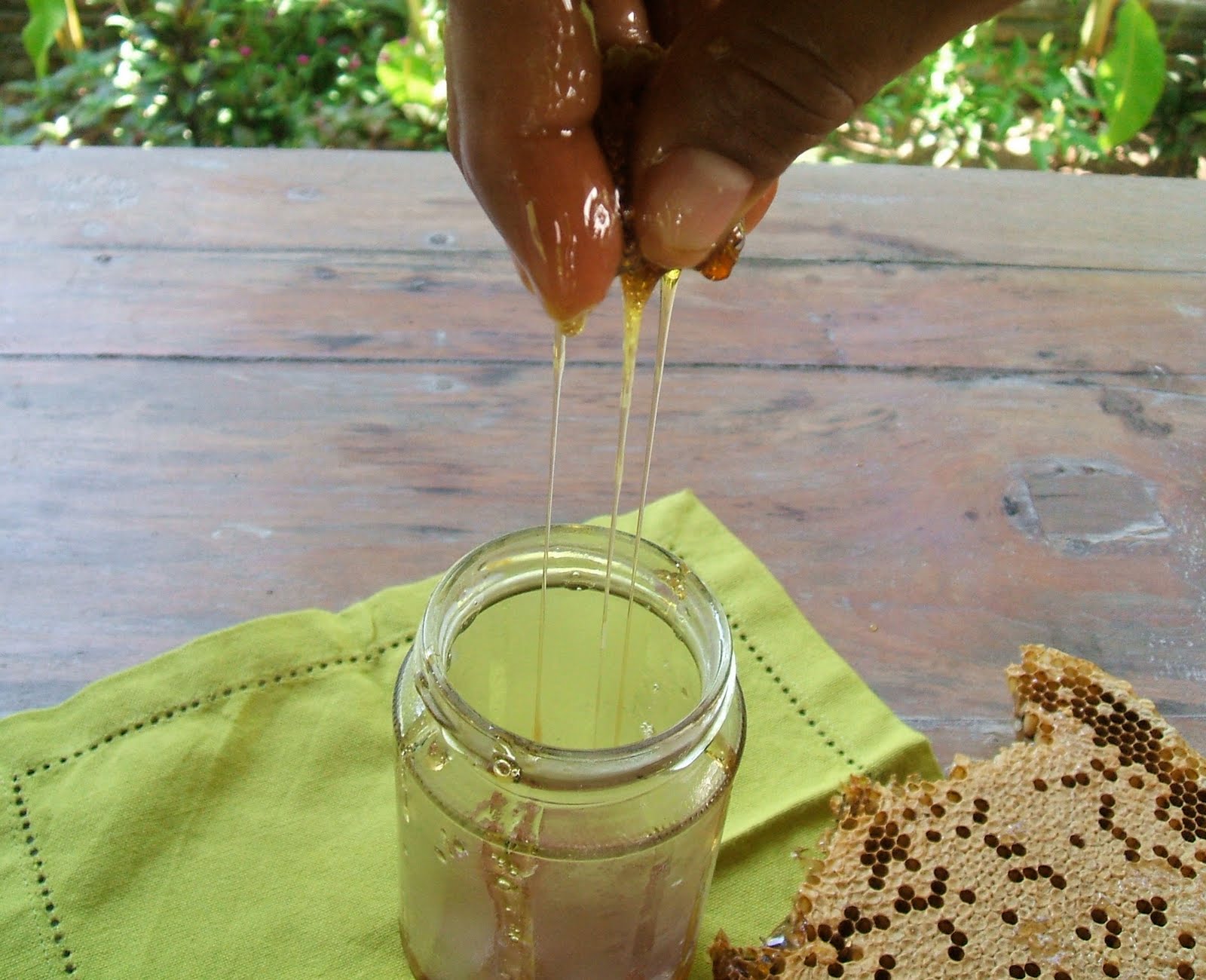
We let the honey drip in a jar from the combs and when they are emptied, not only do we have delicious, wild raw honey but Komang's mother prepares a very special Jakut Urab.

Jakut Urab with Honeycomb

I am not really expecting you to make this recipe, I am giving it as an example of something you might be offered as part of a meal if you lived in a Balinese family. It is a case in point of using the most of what there is and turning it into a nutritious and delicious dish (if quite unexpected).


Once the honey has dripped out of the honeycombs, you are left with the wax, a bit of honey and the larvae. Once boiled, this is chopped finely, bee larvae and all. Then, chopped bird's eye chilies, crispy fried sliced shallots, a handful of toasted grated coconut, salt, some lime juice and a bit of roasted shrimp paste are mixed in with boiled and chopped water spinach and starfruit leaves.

At a time where bees are alarmingly disappearing in great numbers (you can read here and here about this), we feel so grateful to have these celestial creatures grace our land.


life is perfection in the smallest things