January 29, 2011

Kalio and Rendang

The rain is enveloping us and even if I tell myself every day that it is  wonderful to receive water from the sky, I do miss the sun and the happiness it brings to the day. At this time of the year, the end of the rainy season, I always feel like cooking long simmered dishes and spending time in the kitchen. 
Of course, the first thought I have is to cook a daube, maybe a coq au vin or a blanquette; all  dishes of my childhood. The daube and the coq au vin require wine, plentiful in Bordeaux but expensive in Bali, and the blanquette requires veal, unheard of here since Sapi, the cow, is too precious to kill at a young age and I do not want to buy expensive imported meat for a stew, which principle is to transform cheap cuts into tender and flavorful morsels.


We live in a coconut grove and we do have an abundance of coconuts though and there is a stall in the nearby market of Amlapura where I like to buy local beef. I love Rendang, a traditional long simmered dish from West Sumatra, cooked in spices and coconut milk.
The process is interesting in the sense that, instead of sauteing the meat first and adding a liquid as in traditional western stews, the meat, the spices and the coconut milk are all cooked together until the coconut milk reduces into oil and the meat slowly fries in it. The result is a very rich dish, subtly spiced and redolent of coconut sweetness.
The downside, for me at least, is there is not much sauce left in the finished dish and I love sauces. Kalio is simply Rendang which hasn't been cooked all the way. If the cooking is stopped before the coconut milk turns into oil and starts to fry the meat, you have Kalio, a delicious soupy dish where there is plenty of sauce for the rice or bread (or for mashing the potatoes cooked in it along the meat).
And this is what we will have for dinner tonight!

Beef Kalio
serve 6


2lbs, about 1kg of stewing beef, rump, brisket or top round
1 quart 1/2 of fresh coconut milk or good canned coconut milk
6 small potatoes, cut into chunks and parboiled 5 minutes

For the spice paste:
8 shallots, peeled and chopped
7 garlic cloves, peeled and chopped
2 stalks lemongrass, inner part, sliced
2in/5cm fresh ginger, peeled and chopped
3in/8cm fresh galangal, peeled and chopped
2in/5cm fresh turmeric, peeled and chopped
8 long red chilies, chopped
1tsp black peppercorns
3 cloves
4 or 5 gratings of nutmeg


Flavorings for the Coconut Milk:
2 salam leaves
3 kaffir lime leaves
2 turmeric leaves, tied in a knot
1 cinnamon stick
2 lemongrass stems, bruised with the flat blade of a heavy knife
1 Tbs palm sugar, chopped
1tsp sea salt
Place all the ingredients for the spice paste with 2 Tbs of coconut milk in a blender until a smooth paste is formed.
Place in a shallow pan the coconut milk, the spice paste and the meat.


Stir and start cooking on a medium heat. As soon as the coconut milk is about to boil, lower the heat (otherwise it will curdle), add the potatoes and let the stew bubble gently for 1 1/2 hour, maybe a little more. 
The coconut milk should have reduced and the sauce should be thick.


At that point, you have Kalio. If you let the milk reduce to the point it starts to turn into oil oil, you are making rendang and you should watch carefully and stir to avoid scorching. It will take another hour or so, until the meat has absorbed most of the coconut oil and turns brown.
Either way, Kalio or Rendang, serve hot with bread or rice, topped with finely sliced kaffir lime leaves and fried shallots.


January 27, 2011

Rice, two ways: Nasi goreng and Nasi Kuning

One of the first things we prepare every morning is the rice. My mother in-law, Ibu Boni, still makes Nasi for the day the traditional way: soaked, steamed in a conical bamboo basket in an aluminium pot set over a wood fire, soaked again and steamed one last time.


This rice has a wonderful flavor, due to the firewood and the method of cooking, resulting in a delicious and perfect rice, fluffy with each grain separate; a lifetime of experience that I have yet to master.
We use an electric rice cooker and the results, if different, are quite good. Think a crusty sourdough Pain de Campagne versus a supermarket one!
When we have left over rice, Komang makes Nasi Goreng (his way) and when we have lots of time, I make Nasi Kuning (my way).

Nasi Goreng is simply fried rice, done the Indonesian way. Every family has their own recipe and way to prepare it.


Komang's Nasi Goreng
serve 2

2 cups of cooked rice, room temperature
6 oz of chicken, pork or shrimps chopped
1 cup finely sliced cabbage
1/2 carrot, chopped finely
2 pieces of bok choi, chopped
5 shallots, finely chopped
2 garlic cloves, finely chopped
1 tsp rice vinegar
1 Tbs kecap manis
1 tsp fish sauce
3 tsp kecap asin or light soy sauce
sea salt and pepper to taste

For the nasi goreng sauce:
1 large red chile, chopped
3 bird's eye chile, chopped
1 tomato, chopped
6 garlic cloves, chopped
1 tsp shrimp paste
1 Tbs coconut oil or mild oil
some water

In a pan, place all the ingredients for the nasi goreng sauce, except the water. Cook over a medium flame until fragrant, about 5/8 minutes, add some water if needed. Place in a blender and mix until smooth.
Place the rice in a bowl, add the nasi goreng sauce as well as the rice vinegar, fish sauce, kecap manis and soy sauce. Mix and set aside.
In a wok set over a medium flame, put 2 Tbs of oil and fry the meat for 2 or 3 minutes until golden, add the shallots and garlic. Then add the rice with the sauce and seasonings as well as the vegetables. Toss around until thoroughly mixed, add salt and pepper. Continue tossing with a spatula until the vegetables are wilted but still crunchy and the rice is piping hot. Serve with a garnish of fried shallots, peanuts, cucumber slices and fried egg if desired.


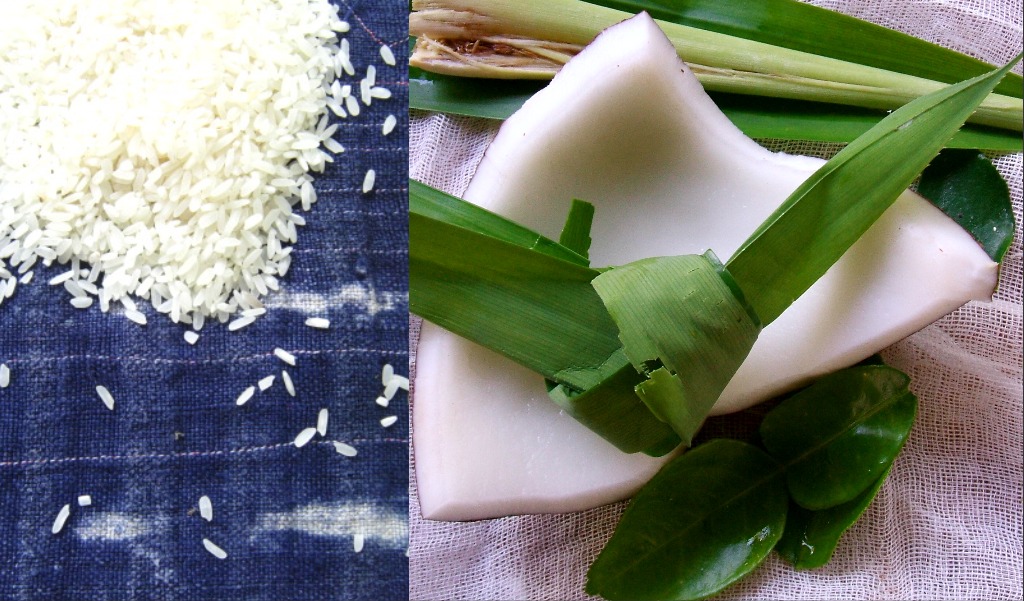
Nasi Kuning is rice cooked with spices, herbs and fresh coconut milk. It is, once cooked, mixed with sambal, more herbs, fried shallots, chilies and some lime juice. This dish is fragrant and delicious and my absolute favorite thing to serve with grilled fish, prawns and duck. It is truly heavenly and you should try it, at least once. 


Nasi Kuning
serve 4
To steam the rice:

3 cups of rice, washed and drained
2 1/2 cups of water
1 1/2 cup of fresh coconut milk or canned coconut milk
2 sticks of lemongrass, bruised with the flat side of a heavy knife
1 large knob of fresh turmeric, grated, juice expelled and added to the water
3 slices of fresh ginger, bruised
1 small stick of cinnamon
6 cardamom pods
3 daun salam (omit if unavailable)
1 pandan leaf (screwpine), tied in a knot (omit if unavailable)
1 leaf of turmeric (omit if unavailable)
1 large pinch of coarse sea salt

In an electric rice cooker, place all the ingredients and cook. Once cooked, un-plug the machine, open the lid and, with a rice paddle, fluff the rice. Close the lid again and wait 10 minutes.

Kasuna-Cekoh


2 Tbs turmeric, chopped (omit if unavailable and increase the kencur to 3 Tbs)
2 Tbs  kencur (cekoh) replace with galanga if unavailable
10 garlic cloves (kasuna)
3 candlenuts
In a mortar, grind all the ingredients to a paste, you could use a food processor if prefered.
In a frying pan, heat 3 Tbs of oil and fry the paste, stirring constantly until it becomes glossy and fragrant, about 4/5 minutes. Drain the oil and leave to cool.

To mix in the rice:
the prepared kasuna-cekoh
5 shallots, finely sliced, deep fried in oil until golden and drained
3 kaffir lime leaves finely, sliced
1 small bunch of lemon basil, leaves only, shredded
the juice of 2 calamondin limes or 1 regular lime
salt to taste
1 Tbs Sambal Goreng ( you could use 2 or 3 bird's eye chilies, very finely chopped)
2 Tbs Sambal Kecicang or 1 torch ginger flower, finely sliced (omit if unavailable)

Place the rice in a bowl, remove all the herbs and spices it was cooked with and add all the ingredients above. Taste, adjust if necessary and serve. Heaven!


January 24, 2011

Going Ghetto in the Jungle

 Ghetto sous-vide, that is! Louise and I have been talking a lot lately about this technique and how it can transform the texture of food. Being interested in the science behind all things, she was very curious about it after having tasted some venison cooked this way by a friend. First horrified to see the meat cooked in a water bath, she was delighted by the results. It got me thinking!
Sous-vide cooking is not a new technique, far from it since it was invented in the late 1800's (minus the elaborate apparatus and plastic bags, I suppose), but has become increasingly popular these days amongst chefs and molecular gastronomy gurus (you can read about the technique here).
Of course, it requires a rather expensive equipment but I thought that if it existed 200 years ago, there was a good chance it could be done in my small kitchen here in Bali without going "haute sous vide".
And that's when I remembered reading about ghetto sous-vide in the Momofuku Cookbook by David Chang!
All what was needed was a ziplock bag, a pot of water kept at the right temperature (130ºF) for the cooking, ice to cool down rapidly the meat afterwards and a grill to finish the meat. Then, after some research, I found this food lab entry and this one from Serious Eats. One was about guidelines for temperatures and safety, the other about using your cooler as a water bath for the cooking. Perfect!
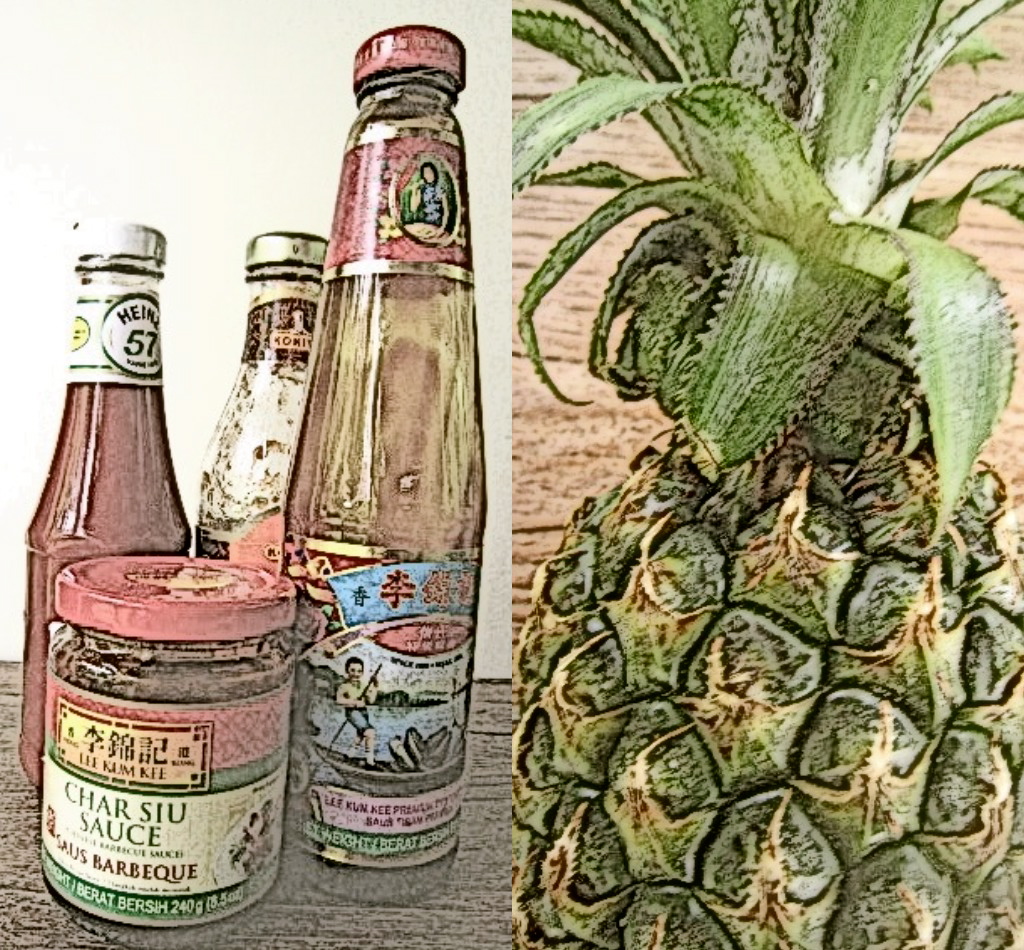
I got a nice cut of local beef (tasty but tough), butterflied it and decided to marinate the meat with our favorite homemade barbecue sauce to which I added some pineapple and starfruit from the garden for the tenderizing effect as well as rice vinegar.


Rahasia Barbecue Sauce
make 1 cup

1 medium onion, chopped
4 shallots, chopped
4 garlic cloves, chopped
1 Tbs vegetable oil
1 lemongrass stick, sliced
1 Tbs palm sugar, chopped
2 Tbs soy sauce
1 Tbs kecap manis
2 Tbs rice vinegar
5 Tbs tomato ketchup
2 Tbs hoisin sauce
2 small slices of pineapple, chopped
1 small starfruit, chopped
2 long red chilies, chopped
4 bird's eye chilies
Juice of one lime
3 kaffir limes leaves finely sliced


Fry the onion in a pan with some olive oil, add the shallots and garlic and cook until soft. Put all the ingredients except the lime in a blender until almost smooth; it should retain some texture.


Cook gently and turn often with a spoon to prevent scorching, it should take about 10 minutes to reach a jammy consistency. Add the lime juice and the kaffir lime leaves. Taste and adjust the seasonings if needed. It should be sweet, hot and a little sour. Let cool and store in the fridge.


Ghetto Sous-Vide Steak with Barbecue Sauce

1-1lb 1/2 of beef (sirloin, hanger, striploin and flank are good)
1 cup rahasia barbecue sauce (recipe above)


Coat the meat with about 1/2 cup of the sauce. Place in a ziplock bag, seal and marinate overnight in the fridge.
Three hours before you plan to grill the meat, pour enough water in a cooler (cool and hot) to reach a temperature of 135ºF or 58ºC (the meat will cool the water a few degrees). Lower the bag with the meat in it, 2/3 of the way closed, with the zipper part just above the water line and push the air out; this should approximate a sous-vide effect with the plastic tightening around the meat. Seal the bag, lock the cooler and let it cook for 1 hour to 1 hour 1/2.
Remove the bag from the cooler after that time, place it in a sink filled cold water and ice to cool it rapidly and place in the fridge.
Fire the grill. When it's ready, grill the meat until both sides are crusty (3/4 minutes on each side) and brush more barbecue sauce on it. Once done, the meat does not need to rest. Slice against the grain. Serve with a sauce made by whisking 1Tbs of the barbecue sauce in some melted butter until emulsified. Voila!


It was meltingly tender, delicious and if kind of labor intensive, worth it. 
Now, would I do this again? I am not sure I would cook this way with an aged Porterhouse steak; it seems to me that if you have a great cut of meat, aged properly, grilling it is just as good, if not better. Now, I have never tasted the sous-vide Wagyu beef at Grant Achatz' (and certainly never will, oh well...). Given the circumstances, it was fun and the results were great! The local meat, which is very  tasty but tough, was transformed into a tender, delicious, quality imported steak, so yes, I think I will definitely use my cooler again soon. If anyone has suggestions, I would be happy to know.


January 17, 2011

Cool, crunchy and spicy on a rainy day


We have had rain for over a month here in Bali; the humidity is high, the spirits are getting low and everyone watches the sky hoping that today will be different and wondering if it will ever stop.
A visit to Komang's cousin who has a small warung up the street from our house is what I need, just seeing all the packaged goodies cheer me up. In this tiny place one can find all kind of snacks and there, I  feel like a child in a candy store, what to choose is always difficult.


I will order extra spicy rujak with tamarind, es campur with crunchy seaweed, es jeruk, little bags of krupuk and, while waiting, we will chat about the weather...

Rujak


Rujak can be made with a fruit and vegetable mix of your choice: crunchy apple, snakefruit, tomato, starfruit, pineapple, mango, cucumber or carrot, all slightly under-ripe and grated or sliced in bite size pieces. It is delicious, refreshing (and slightly addictive due to the chilies) on its own but we love it with grilled meat as well. Think barbecued ribs or grilled Porterhouse steak, medium rare and thinly sliced against the grain with this salad. Haaaa, I almost forgot the rain (can't grill)!

In a mortar, grind 3 (or 5 for the hard core chili lovers) bird's eye chilies, some sea salt and 1/4 tsp roasted shrimp paste. Add 3 Tbs tamarind paste, 2 Tbs palm sugar, and lime juice. Taste and adjust to your liking, it should have a balance between sweet, sour, hot and spicy, but definitely be on the hot side.


Es Campur and Krupuk


Es Jeruk 


2 sour oranges or 1 orange and 2 limes, sugar syrup to your liking, ice cubes and water.
In a pan, melt equal parts of sugar (or palm sugar with water) with a vanilla bean, boil for one minute, turn off the heat. Once cooled, pour the strained juice of the oranges and limes in a cup, add some sugar syrup, top with ice and water. Stir, taste. It should be sweet and sour and completely delicious!

And waiting for the sun to shine again, I will make some fresh hibiscus and jasmine tea for us after snacks.


Wishing you all a beautiful day!


December 18, 2010

Temples on the day of Kuningan


Penjor

Today was Kuningan, the last day of the Galungan festival which span a period of ten days and occur every 210 days in the Balinese calendar year (the Pawukon). It is a time celebrating the victory of Dharma over Adharma (or good over evil). During that time the gods and the spirits of the ancestors return to earth and rest in the family temples. All the temples are dressed and decorated with offerings to honor gods and ancestors.


It is a time of great celebration when families reunite to honor the gods and their family's ancestors (and have fun too). Kuningan mark the day where the gods and the spirits return to heaven and everyone has been busy to prepare offerings for this occasion. This morning, we woke up early to decorate our temples and pray.


 Then, we went to visit the Mother temple of Komang's family (the Ibu temple) and the Pemagsan.


These temples are very old and have beautiful carvings and delightful little statues.


On our way home, we first stopped at Komang's uncle and prayed.


December 17, 2010

Made is getting married!


Made Suarta aka Made Pintar (Smart Made) got married to his long time sweetheart Ketut Sepi (Quiet Ketut). Not only Ketut is quiet and beautiful, she is very patient as well since Made and her dated for 8 years!


Marriage in Bali is one of the last life passages rituals that every Balinese will go through, from birth to death. As in the rest of the world, it is a very important life event and many things have to be prepared. 
First, the Pemangku, the villlage priest, finds an auspicious date for the bride to move in with the groom and chooses another auspicious date for the cerenomy to take place. There is always a lapse of time between these two dates; during that time the bride and groom have to stay in the house compound and are not allowed to leave the property. Made and Ketut had to stay home for 5 days but sometimes, as in the case of one of Komang's friend, it was 34 days!
A high priest is contacted and arrangements are made for him or her to come and  perform the ceremony on the chosen day. Since that day is auspicious for more than one couple, they are in high demand and sometimes the ceremony is very early before sunrise or late in the day, depending of their busy schedule.


It takes a lot of people to prepare for the wedding, many offerings have to be made in the week preceding the ceremony and they all will grace the house and the temple on the wedding day.


All the people who come and give their time to help are offered breakfast and lunch, therefore, there is a special crew of people whose sole occupation is to cook (and need to eat too). It is not rare to have at least 50 people helping every day.
At night, someone (similar to a husher in the West) stands at the entrance door and welcome the guests with a happy "Om Swastyastu", the Balinese words of greetings and protection.


The presents of sugar and rice, piled in a basket and covered by a crocheted top are received by a member of the family and placed in big bags.


These will be distributed amongst all the helpers after the ceremony. No wedding list at Bloomingdale's here, a marriage is not about receiving material presents, it is about a community coming together for this very important occasion. Most of what has been given by someone will be given back to someone else. It is a circle of thankfulness and understanding that, when we all share, we all have plenty.

Jaja Nganten
These beautiful small cakes are made for weddings and represent the union between a man and a woman.

At night, an area is set up for the preparation of the drinks and cakes which are given to the arriving guests. Young girls pass around the guests with coffee or tea and a plate of Jaja, the little cakes all Balinese love to nibble on. 


Dadar Unti
 Crêpes with Coconut and Palm Sugar filling
make 12
Crêpes batter:
1 cup flour
1/4 cup rice flour
2 eggs, beaten lightly
1 Tbsp sugar
pinch of sea salt
1 tsp vanilla essence or 1 vanilla bean, seeds sraped
1 cup coconut milk
1/2 cup water

Coconut filling:
1 cup  fresh grated coconut
1 pandan leaf tied in a knot
1tsp vanilla essence
5oz of palm sugar
3/4 cup water

Sift the flours into a bowl. In another bowl, mix together the eggs, salt, sugar and coconut milk, add the flours, whisking until smooth. Add water. Let rest for 2 hours.

To make the filling, put the palm sugar, water, pandan leaf and simmer until the liquid has somewhat reduced, about 10 to 15 minutes. Strain the syrup and remove the leaf. put the grated coconut in a pan, add the syrup and cook for 3 minutes at low heat. If the mixture seems runny, add some grated coconut.

Brush a small frying pan with a pat of butter, add 1/4 cup batter, swirl it around (it should be very thin) cook until set on the edges, flip it and cook 2 minutes longer. turn out of the pan the crêpe and keep covered with a towel, repeat until all the batter is used.
Fill each crêpe with 2 tablespoons of filling and roll like a spring roll.

The night before the wedding, after all the offerings have been made, it is time to prepare the feast for the wedding. Pigs and chickens have to be killed, spice pastes, satés, lawar and the rice are cooked during the night and will be first placed in the temple as offerings to the gods.  
On the morning of the wedding, a stylist arrives early to prepare the bride and groom. They will be dressed like a Prince and a Princess for the day, wearing the rich (and heavy) Songket woven with gold threads, jewelry and flowers in their hair. 


The Pedanda, most of the time a Shiwa priest, will arrive and perform the ceremony sitting on the temple altar, chanting the rituals mantras in Sanskrit accompanied by the haunting sound of his bell, tying knots in a leaf of alang alang for Made and Ketut to place around their forehead protecting them from the kala, the unseen negative forces (what we would call the demons) and giving them the Tirta, the sacred water scented with flower petals, to drink. And everyone will pray.


And then, all will have been done. Tomorrow will be a new day in the life of Ketut and Made.